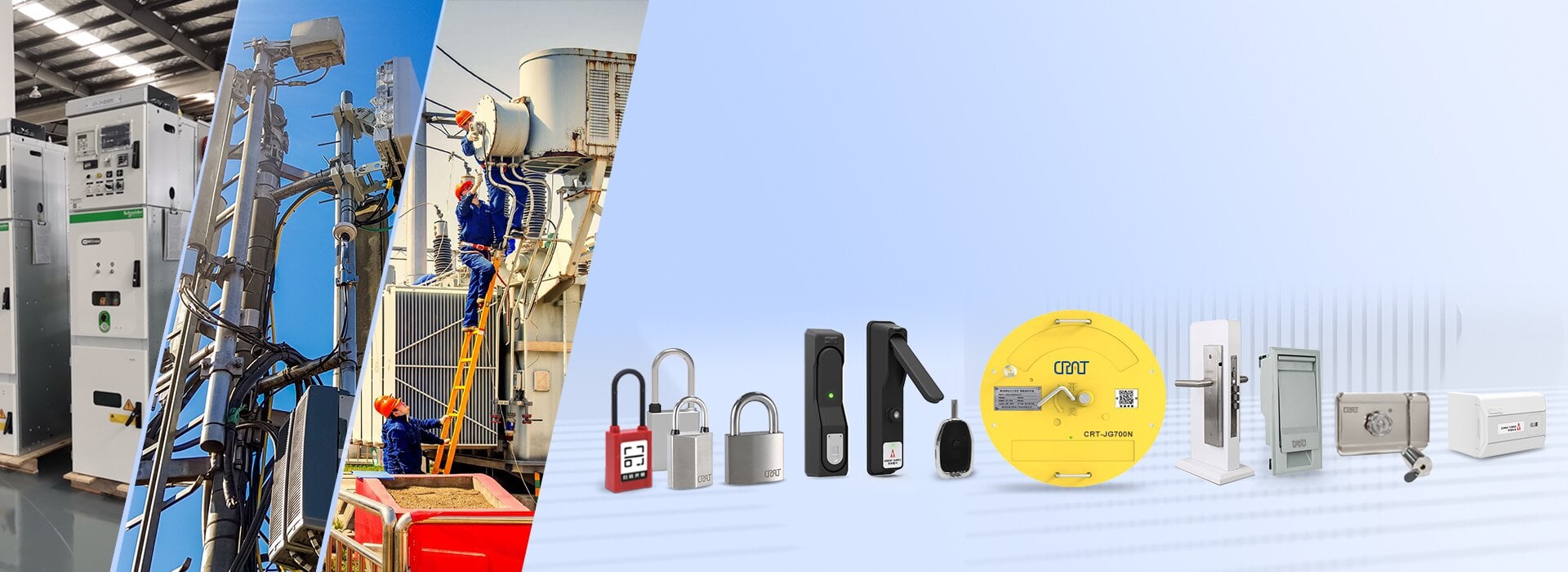
A full range of smart locks

Industrial security isn't about making things unbreakable. It's about knowing who opened what, when, and whether they were supposed to. This article covers a passive electronic padlock and intelligent key system — a practical alternative to mechanical master-key setups and fully networked smart locks. No batteries in the lock, no wiring to the door, no cloud subscription required.
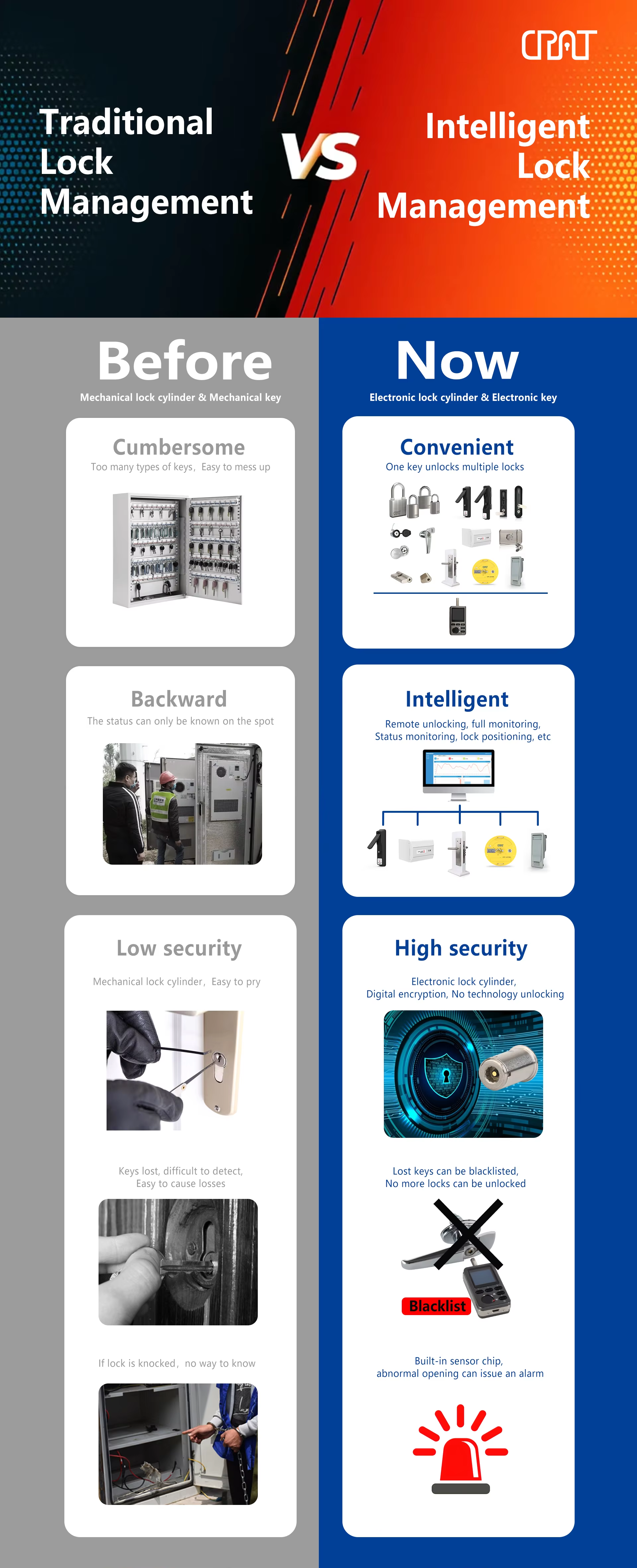
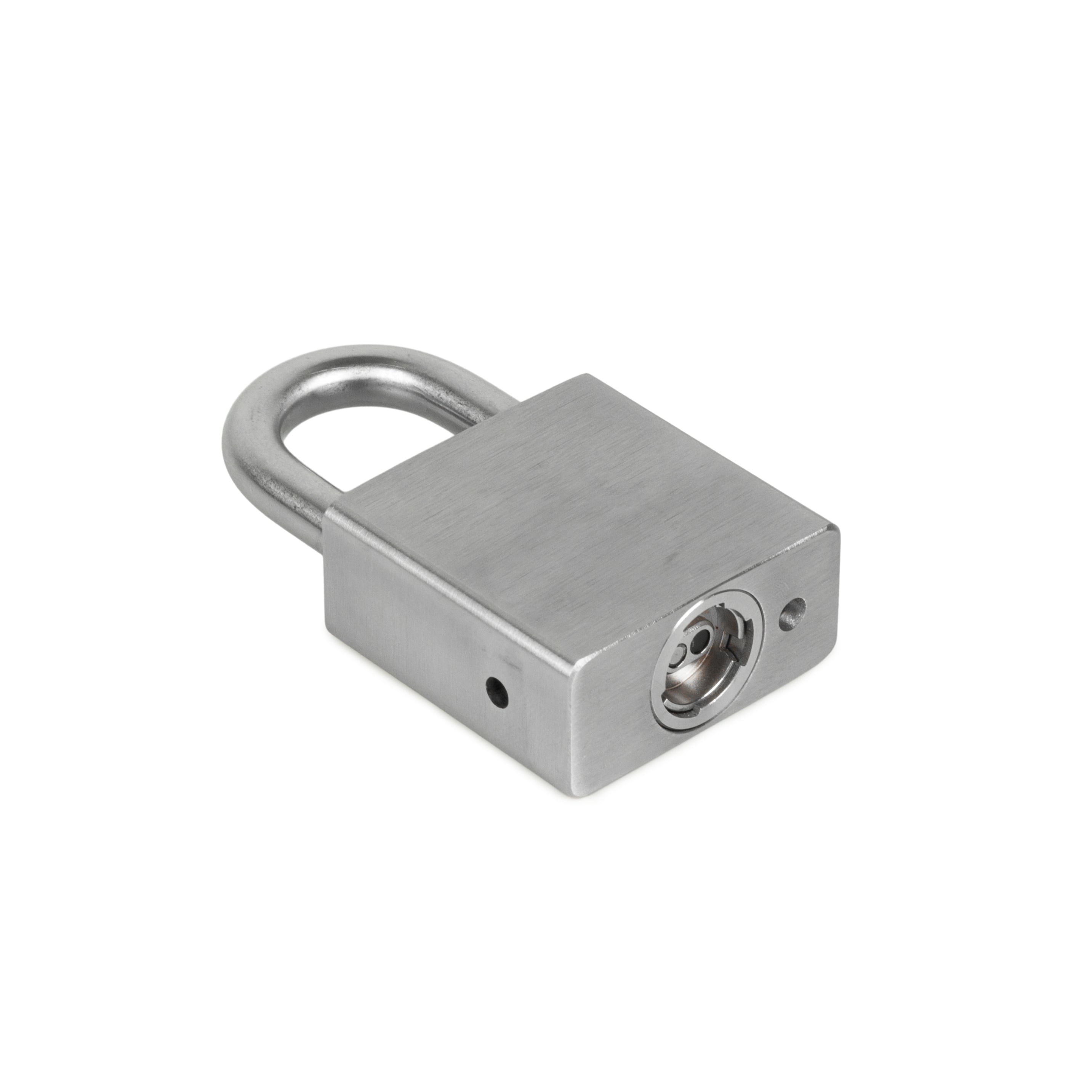
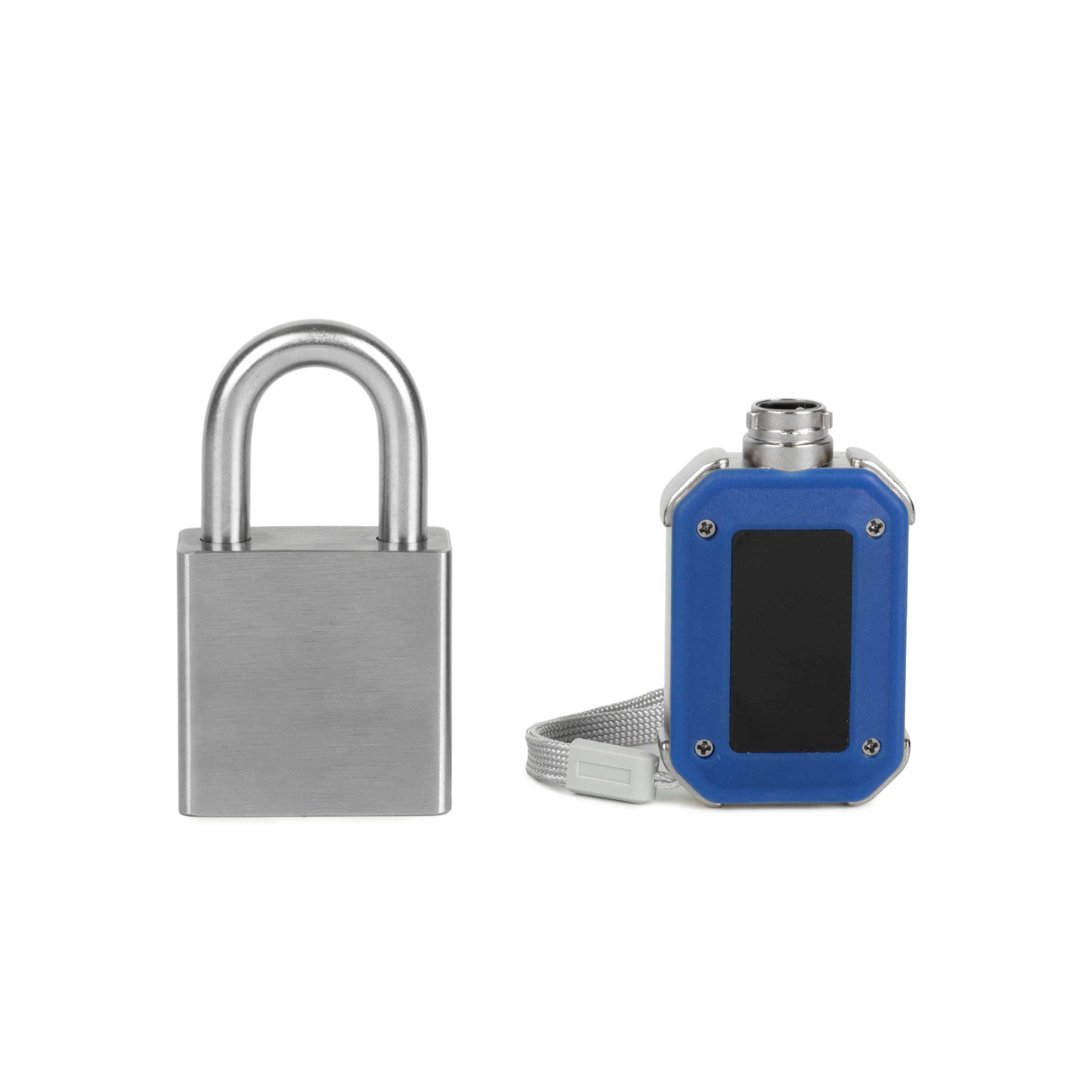
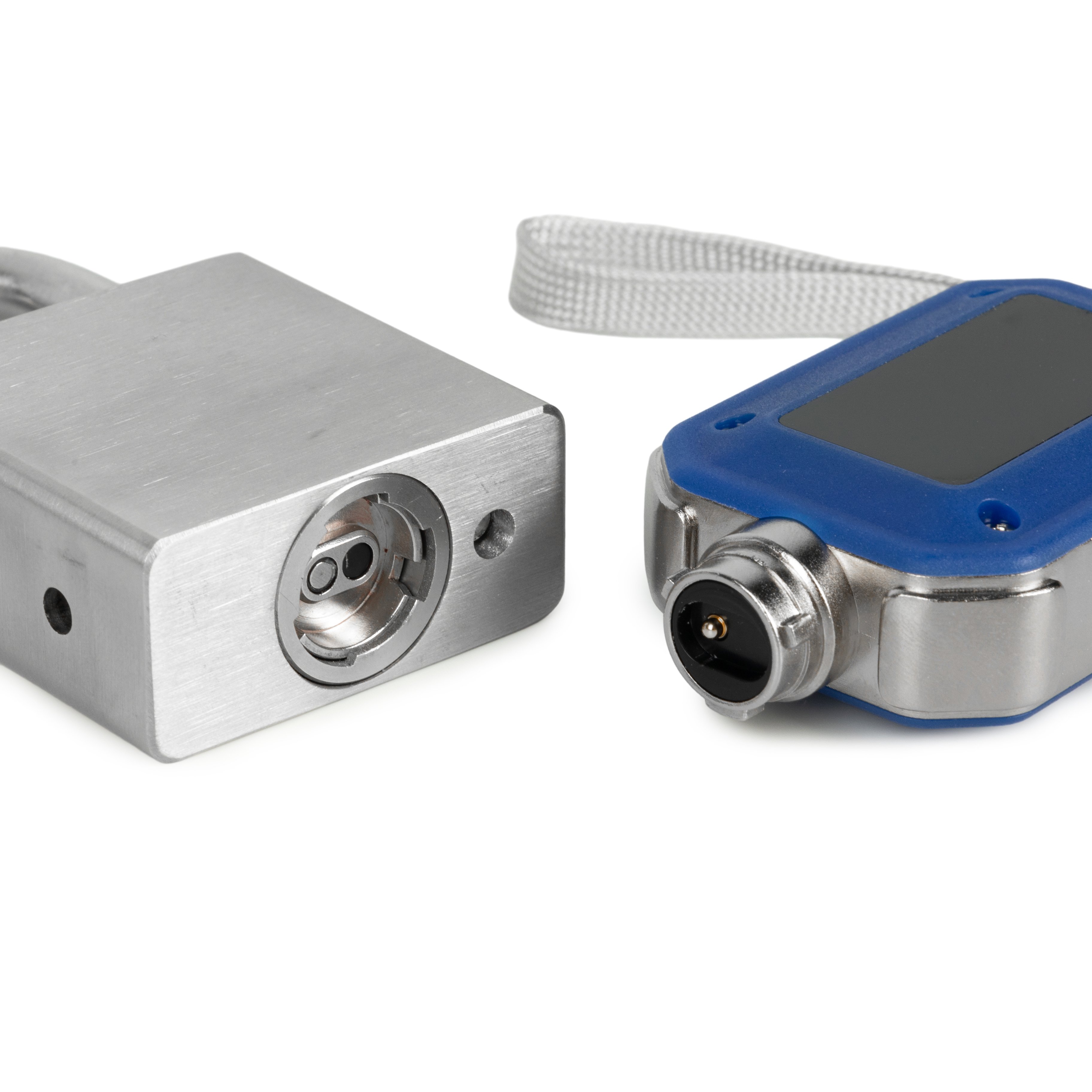
In a passive electronic lock, the lock body contains no power source of its own. The lock cylinder houses a small logic board and motor, but it stays dormant until an active key makes contact. When the key is inserted, it delivers power and transmits an encrypted digital credential. The lock validates the credential, and if authorized, the internal motor drives the mechanism — allowing the user to rotate the key and open or close the shackle.
This design eliminates several points of failure common in battery-powered smart locks. There is no battery to replace in the lock, no wireless module that can be jammed or intercepted, and no dependency on network infrastructure at the lock point. The lock is essentially a solid-state device that only activates when the key is physically present.

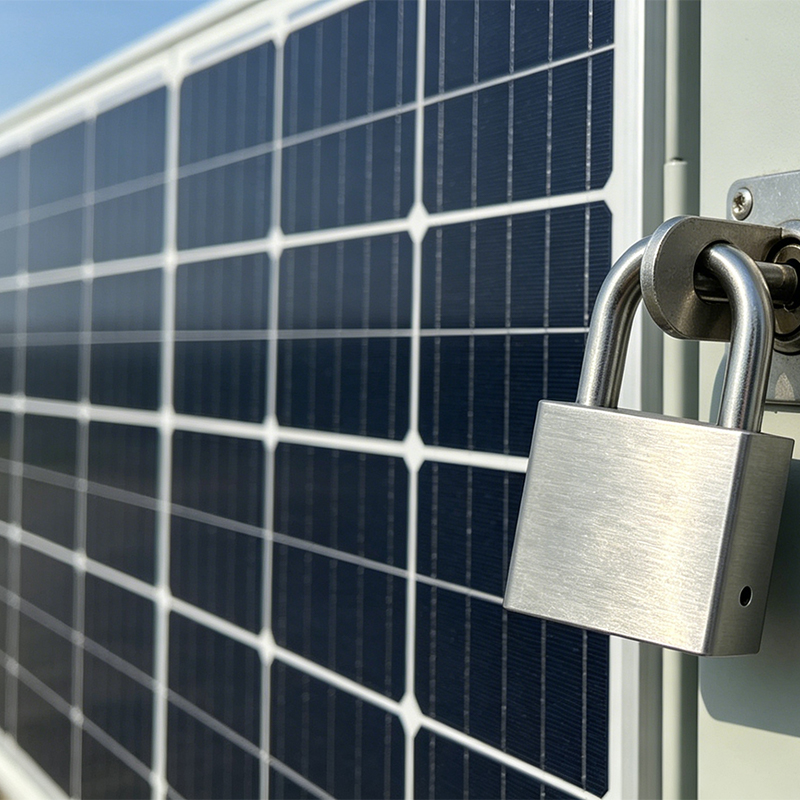


The lock body and cylinder are machined from 304 stainless steel. This is the same grade used in food processing equipment and marine hardware — it offers reasonable corrosion resistance for most industrial and outdoor environments. The spec sheet confirms compliance with GB/T 2423 salt spray testing standards, which is the Chinese equivalent of IEC 60068 for environmental testing.
The IP65 rating means the lock is dust-tight and protected against low-pressure water jets from any direction. This covers rain, washdown, and dusty factory floors. It does not cover submersion — if the lock needs to sit underwater, this isn't the right product.
The operating temperature range is specified at −40 to 80°C (−40 to 176°F). This is genuinely wide: the lower end covers cold storage and unheated outdoor installations in winter; the upper end covers most industrial environments short of direct furnace proximity. The lock is rated for 20% to 93% relative humidity, which handles everything from arid climates to tropical conditions with condensation risk.
The intelligent key is the active component of the system. It contains a 600 mAh rechargeable lithium-ion battery, charged via a standard USB Type-C port at 5 V. The key tip uses a gold-plated copper single-contact design. Gold plating is a practical choice here — it resists oxidation and ensures reliable electrical contact over thousands of insertion cycles, which matters when the entire unlock sequence depends on a clean connection.
The key housing combines zinc alloy and ABS plastic. Zinc alloy provides rigidity and weight, while ABS keeps the device from being unnecessarily heavy and absorbs some impact if dropped.
| Parameter | Lock | Key |
| Body material | 304 stainless steel | Zinc alloy + ABS |
| Operating voltage | 3–5.5 V (powered by key) | 4.2 V (battery) |
| Charging | None (passive) | USB Type-C, 5 V |
| Operating temperature | −40 to 80°C | −40 to 80°C |
| Operating humidity | 20%–93% RH | 20%–98% RH |
| Cycle life | ≥20,000 operations | — |
| Protection rating | IP65 | — |
| Onboard log storage | 22 entries | — |


This system is not just an electronic replacement for a mechanical key. The intelligent key carries an identity profile configured through a management platform. Three features define the access model:
1. Time- and Scope-Based Authorization
Each key can be programmed with specific access rights — which locks it can open and during what time windows. A maintenance contractor might get access to the electrical room between 8 AM and 5 PM on weekdays only. If they try the same lock on a Sunday, the key simply won't authenticate. There is no physical way to override this short of destroying the lock.
2. Identity Binding
The key can be bound to an individual user's mobile phone. If the key is lost or stolen, it cannot be used by an unauthorized person — the binding breaks and the key becomes inoperable until reauthorized. This addresses one of the most common security vulnerabilities in mechanical key systems: key duplication and lost-key risk.
3. Group Recognition
When new locks are added to the system, authorized keys automatically recognize them without needing to be reprogrammed or re-docked. This is particularly useful in expanding facilities where access points are added over time.

Each lock cylinder stores up to 22 event logs internally. These are written to the lock's onboard memory at each operation and read back to the key during the next authenticated insertion. The key then uploads the logs via USB Type-C when connected to a management terminal.
22 entries is not a lot — it's enough for a moderately used lock to buffer events between key dumps in most industrial settings. In high-traffic access points where the lock might see dozens of operations per day, logs need to be collected more frequently. This is a deliberate trade-off: keeping the lock electronics simple and low-power eliminates the need for large memory chips and extends reliability.
The log data includes which key operated the lock, at what time, and whether the operation was a lock or unlock. This gives facilities managers a verifiable record of access events without installing network cables or wireless gateways at each lock point.
The physical operation is straightforward:
1. Wake the key by pressing its activation button — a green LED confirms it's ready.
2. Insert the key tip into the lock cylinder interface. The single gold-plated contact mates with the lock's receiving terminal.
3. The key transmits power and an encrypted credential to the lock.
4. The lock's internal processor validates the credential.
5. If authorized, the motor engages.
6. Rotate the key clockwise 90° — the shackle opens.
7. To lock, insert the key again and rotate counterclockwise 90°.
The entire sequence takes about two to three seconds once the user is familiar with the motion. There is no waiting for Bluetooth pairing, no app to open, no PIN to enter on the lock itself. The only user-facing action beyond the physical key turn is waking the key.

This type of system is designed for facilities that have multiple access points but don't want the cost and complexity of wiring every door or managing batteries in every lock. Common deployment scenarios include:
Warehouses and distribution centers
● Securing individual storage zones, electrical panels, and equipment cages without running power or network cables to each point.
Telecom and utility infrastructure
● Remote cabinets and equipment shelters where the lock must survive outdoor exposure and there is no convenient power source.
Cold storage facilities
● The lock operates at −40°C, which would kill most battery-powered smart locks within hours.
Multi-tenant industrial parks
● Each tenant's area can be secured with locks that only their keys can open, with a master key for property management.
Logistics and fleet operations
● Securing trailers, containers, and cargo access points with auditable access records.
Where it does not make sense: single-door residential or small-office use. The system is over-engineered for that. A standard smart lock or even a mechanical deadbolt would be more cost-effective.

Key battery life: The 600 mAh battery is modest by smartphone standards, but the key only draws power during the brief unlock sequence. In typical daily use — say 20 to 30 operations — a full charge should last weeks. Heavy-use environments may require weekly charging. USB Type-C means charging is compatible with standard phone chargers and power banks.
Lock cycle life: Rated at ≥20,000 operations. At 10 cycles per day, that's roughly five and a half years of service. At 50 cycles per day on a busy access point, closer to one year. The spec is comparable to mid-range mechanical padlocks, but the electronic components may fail before the mechanical wear limit is reached.
Log collection workflow: Since logs are collected offline via the key, someone needs to physically visit or periodically use the management terminal to pull data. In large facilities, this means incorporating log collection into routine patrol routes. If real-time alerting is required — for example, instant notification when a specific lock is opened — this system won't provide it without an additional network layer.
Physical security: The lock body is stainless steel, and the shackle appears to be a thick hardened steel bar. It will resist bolt cutters and hammers to the same degree as any quality industrial padlock. The electronic interface is recessed and protected by the lock body, making it difficult to tamper with or drill out. However, like any padlock, the weakest point is usually the hasp or mounting hardware, not the lock itself.
This passive padlock system addresses a specific gap: the space between dumb mechanical locks (no audit trail, keys can be copied) and fully networked access control (expensive to install, requires power and data at every door). By putting the intelligence and power in the key rather than the lock, it delivers electronic access control and audit logging at a per-lock cost closer to a mechanical padlock than a networked reader.
The trade-offs are real — log collection is not real-time, the key must be physically carried and charged, and the onboard log capacity is limited to 22 entries. But for facilities that need auditable access control across dozens or hundreds of points without running cable, these are acceptable compromises for a system that is fundamentally simpler and more robust than a networked alternative.

Copyright © Jiangsu Create Intelligent Technology Co., Ltd. All Rights Reserved - Privacy Policy
 EN
EN
 AR
AR
 BG
BG
 NL
NL
 FI
FI
 FR
FR
 DE
DE
 HI
HI
 IT
IT
 JA
JA
 KO
KO
 NO
NO
 PL
PL
 PT
PT
 RO
RO
 RU
RU
 ES
ES
 SV
SV
 CA
CA
 TL
TL
 ID
ID
 SR
SR
 UK
UK
 VI
VI
 TH
TH
 TR
TR
 FA
FA
 AF
AF
 MS
MS
 GA
GA
 CY
CY
 IS
IS
 AZ
AZ
 BN
BN
 LO
LO
 LA
LA
 SO
SO
 MY
MY
 KK
KK
 UZ
UZ